The History of the Bruno Paillard Estate
Bruno Paillard, a man of audacity and determination
Bruno Paillardcomes from a family ofBrokerand winegrowers toBouzyAndVerzenayAfter a short career as a broker, which gave him an optimal knowledge of theChampagneHe decided to make his own champagne. At 27, he sold his Jaguar and created a new champagne house.Champagnein a region that was then very protectionist. He rented a cellar, bought carefully selected grapes, and produced his first vintages. Very quickly, the styleBruno PaillardHe captivated leading critics and the press. He then created, with the help of architect Jacques Bléhaut, a contemporary cellar incorporating the highest quality innovations. His daughter Alice joined the estate in 2007 and continues the work begun by her father. The winery remains independent and exports over 75% of its production. Its wines are served in the finest restaurants and at select wine merchants.
An exceptional vineyard
Biodiversity, respect for the land and tradition
In the vineyard, respect for the terroir guides the team's entire cultivation approach. The soil is worked to extract all its minerals. Short pruning allows for optimal use of the plant material. Particular attention is paid to the soil's microbial life. In short, thesustainable viticultureThis approach is favored, with the elimination of herbicides and pesticides and the partial planting of grass on the soil.biodiversityis favored with the presence of different varieties of flowers which promotes the arrival of bees and pollination of the vines.
From its origins of 3 hectares, the vineyard now extends over 30 hectares spread across 15 crus, 14 of which are located in the heart of Champagne: Le Mesnil-sur-Oger, Oger, Cumières, and Verzenay, for example. The Riceys cru, the undisputed jewel of the Aube region, is the exception: situated in the south of Champagne. This collection comprises more than 100 parcels, each with its own unique characteristics. Nearly half are classified as "Grand Cru," while Grand Cru vineyards represent only 17 of the 320 villages in Champagne. This exceptional vineyard now provides more than half of the House's grapes.
The style of the wines
The Bruno Paillard Style
The House has mastered the art of blending, from crus and grape varieties to vintages. Each blend is carefully crafted to achieve finesse, elegance, and complexity. The effervescence is light and pure, highlighting the wine's vinous character without any harshness.
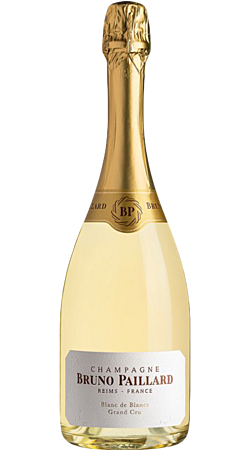
The wine's color is natural and bright, with green highlights for the Blanc de Blancs and golden for the...First Vintage.
Nuances of citrus and almonds mingle with red berries (for the Pinot Noirs) and exotic fruits (for the Pinot Meuniers). Only the first pressings are used to extract the purest fruit. Freshness is the hallmark of all the wines, with reduced dosage.
The house offers great champagnes where complexity and elegance flourish in the cellar.Bruno PaillardIn fact, it was the first, as early as 1983, to mention the month and year of disgorgement of each of its bottles in order to optimize the aging of the wine.